REGISTER
Biological Reference Materials (BRM) Webinar Series – Three-Part Webinar Series
Purpose of the Webinar Series
Co-hosted by the Animal-Free Safety Assessment Collaboration (AFSA) and endorsed by the International Alliance for Biological Standardization (IABS), this webinar series will increase awareness and practical understanding of biological reference materials and their role in supporting the transition from in vivo to in vitro methods for vaccine release testing. This webinar series will present the following:
- Case studies that illustrate how reference standards can support implementation of in vitro methods across different vaccine products and technologies
- Regulatory expectations during method transitions
- Real-world examples on the use of appropriate reference standards, including guidance for situations where no reference standard or material yet exists
Series Overview
The series is designed to move participants from foundational concepts to applied examples, connecting regulatory expectations with practical approaches for adopting in vitro methods in vaccine release testing.
Webinar 1 introduces core principles and regulatory considerations, illustrated through DTaP and Hepatitis B examples. Watch the recording here.
Webinar 2 focuses on reference material lifecycle management and transition planning, using Rabies and tick-borne encephalitis (TBE) case studies. REGISTER
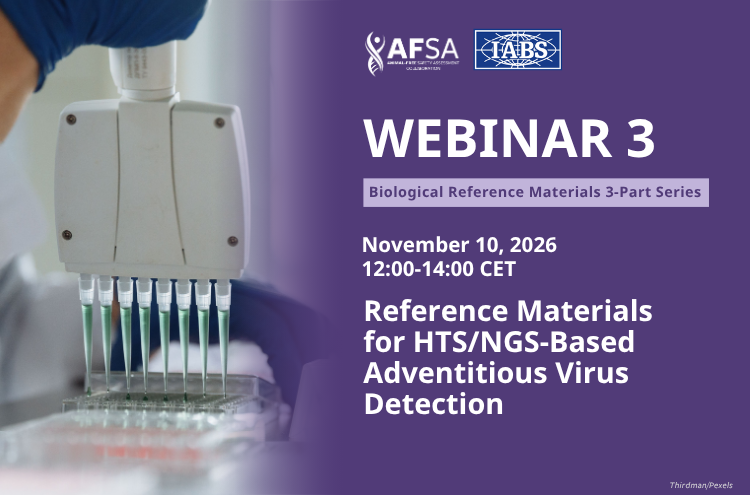
Webinar 3 examines the use of reference viruses for next-generation sequencing (NGS)-based adventitious virus detection.
Pre-read Material
Agenda
| Time (CET) | Session | Speaker |
| 12:00–12:05 | Welcome & Session Objectives | Janette Turner, Humane World for Animals Bio |
| 12:05–12:30 | HTS/NGS for Adventitious Agents: A Regulatory Overview | Laurent Mallet, European Directorate for the Quality of Medicines & HealthCare Bio |
| 12:30–12:55 | Reference Materials for NGS Implementation as a New Approach Methodology for Adventitious Virus Detection | Arifa Khan, Center for Biologics Evaluation and Research, U.S. Food and Drug Administration Bio |
| 12:55–13:15 | Implementing NGS for adventitious virus detection in a live virus vaccine | Leyla Diaz, MilliporeSigma BioReliance® Testing Services Bio |
| 13:15–13:35 | HTS for adventitious virus detection : reference materials considered throughout Sanofi vaccine test set up | Carine Logvinoff, Sanofi |
| 13:35–13:55 | Panel Discussion / Q&A | Moderated by Humane World for Animals |
| 13:55–14:00 | Series Wrap-Up | Janette Turner, Humane World for Animals |